
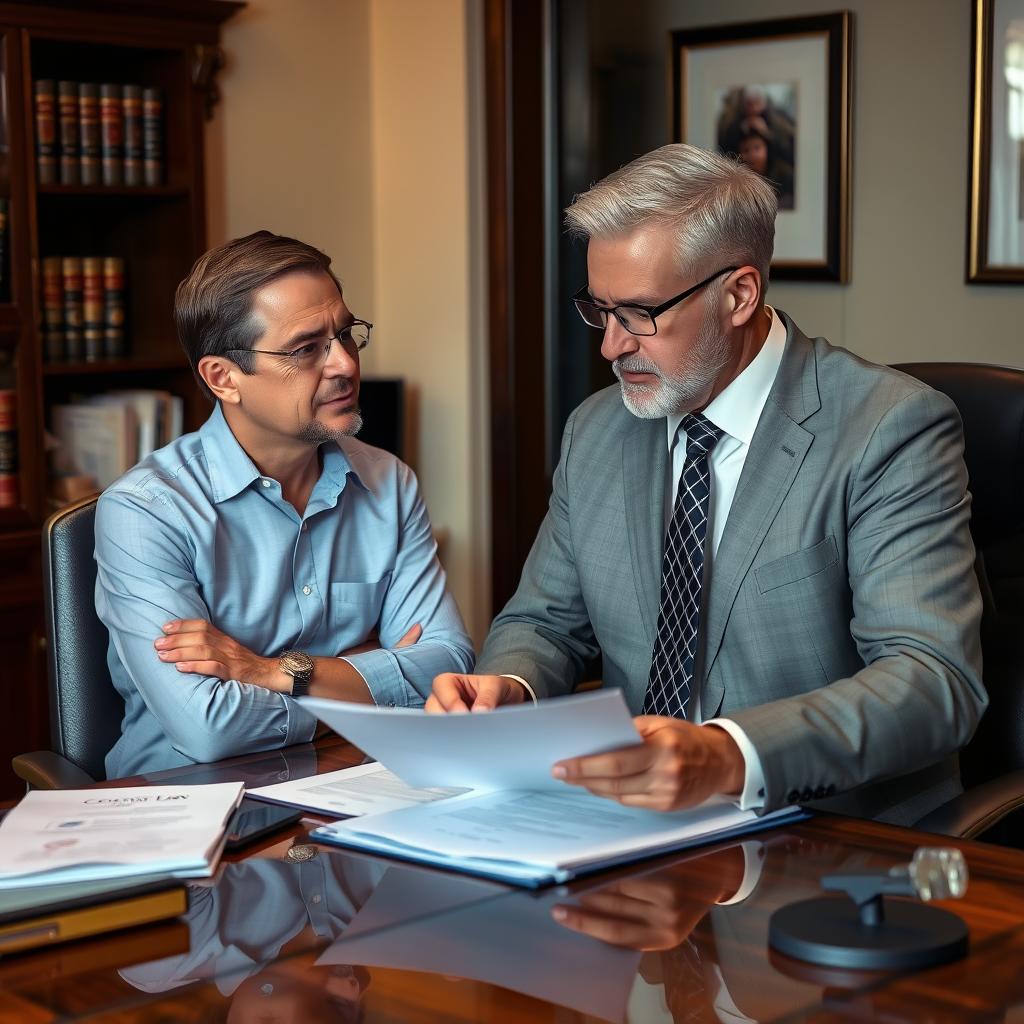
TBI Lawyer Bloomingdale, DC
A traumatic brain injury (TBI) changes everything in an instant. A collision on North Capitol Street, a fall in a Bloomingdale row house, or an accident near the McMillan Sand Filtration Site can leave you or a family member facing a long road of medical treatment, rehabilitation, and uncertainty. If you are searching for a TBI Lawyer in Bloomingdale, DC, you are likely navigating a complex landscape of insurance claims, medical bills, and the procedural rules of the D.C. Superior Court. Law Offices Of SRIS, P.C. Concentrates its practice on helping injured individuals understand their legal options and pursue compensation for the full scope of their losses. Mr. Sris, the firm’s Owner and Founder, and the firm’s Of Counsel attorneys bring extensive combined legal experience to personal injury matters across the District of Columbia. To speak with an attorney about a traumatic brain injury claim in Bloomingdale, reach our firm at (888) 437-7747. Law Offices Of SRIS, P.C. – Advocacy Without Borders.
What a Traumatic Brain Injury Claim Means in Bloomingdale, Washington, D.C.
Bloomingdale is a distinct and historic neighborhood in the District of Columbia, known for its Victorian row houses, proximity to Howard University, and strong community identity. When a Bloomingdale resident sustains a TBI due to another party’s negligence, the legal claim proceeds under the unique jurisdictional rules of Washington, D.C. Personal injury claims, including those for traumatic brain injuries, are filed in the Civil Division of the D.C. Superior Court, located at 500 Indiana Avenue NW. This court has a unified structure, handling everything from small claims to complex litigation, and is easily accessible from Bloomingdale via the Judiciary Square Metro station on the Red Line.
D.C. Law applies a specific framework to personal injury claims, and it differs from the rules in neighboring Virginia and Maryland in one critical way. Washington, D.C. Follows the doctrine of contributory negligence. This means that if a person who files a claim is found to be even one percent at fault for the accident that caused their injury, they can be completely barred from recovering any compensation. For an individual suffering from the cognitive and physical effects of a brain injury, this legal standard makes it essential to work with experienced counsel who can thoroughly investigate the facts, preserve key evidence, and build a case that clearly establishes the other party’s liability. The statute of limitations for filing a personal injury lawsuit in D.C. Is generally three years under D.C. Code § 12-301(8), and a case for wrongful death must be brought within two years. These deadlines are strictly enforced.
How Mr. Sris and the Firm’s Of Counsel Attorneys Handle TBI Cases
A traumatic brain injury case is not simply a larger version of a routine accident claim. The long-term consequences of a TBI can involve cognitive deficits, memory loss, personality changes, and permanent disability. Law Offices Of SRIS, P.C. approaches these cases with an understanding of the medical, financial, and personal toll they take on a client and their family. Mr. Sris and the firm’s Of Counsel attorneys work with medical professionals to understand the full nature and prognosis of the injury, so they can pursue a claim that seeks damages for both current and future needs.
The process begins with a detailed review of how the accident happened. In a Bloomingdale case, this might involve analyzing accident reports, reviewing traffic camera footage from intersections like Rhode Island Avenue and First Street NW, or examining property maintenance records. Because D.C.’s contributory negligence rule leaves no margin for error, the firm’s attorneys focus on developing evidence that demonstrates the defendant’s fault. Once liability is established, the firm pursues recovery for the full range of damages, including past and future medical expenses, lost income and diminished earning capacity, rehabilitation and therapy costs, and non-economic damages for pain, suffering, and the loss of quality of life. Attorneys handle communication with insurance companies and are prepared to litigate the case in the D.C. Superior Court if a fair settlement is not reached.
Recognizing and Proving a TBI After an Accident
Unlike a broken bone, a traumatic brain injury is not always immediately visible. After an accident, symptoms may develop over hours or days. A person may feel dazed or confused and dismiss it as simply being shaken up. It is important to seek medical attention immediately after any head impact. A thorough medical evaluation is the first and most critical step in protecting your health and your legal claim.
A medical diagnosis, often supported by CT scans, MRIs, and neuropsychological testing, provides the objective evidence necessary to link the injury to the accident. Law Offices Of SRIS, P.C. Uses these medical records, along with expert testimony from neurologists, vocational rehabilitation attorney, and life-care planners, to build a comprehensive picture of how the TBI has affected a client’s life and what support they will need moving forward. The goal is to present a clear, evidence-based claim for full compensation.
About Mr. Sris and the Firm’s Of Counsel Attorneys
Mr. Sris, Owner and Founder of Law Offices Of SRIS, P.C., has been practicing since 1997 and is admitted to the bar in the District of Columbia, Virginia, Maryland, New Jersey, and New York. His legal experience includes a background as a former prosecutor. Mr. Sris testified before the Virginia House Courts of Justice Committee in support of 2019 HB 635 (chief patron Del. David Bulova). This multi-jurisdictional experience provides a broad perspective on the procedural and legal challenges that can arise in complex injury cases in Washington, D.C.
The firm’s Of Counsel attorneys contribute extensive collective experience to personal injury cases. They collaborate on case strategy, evidence gathering, and trial preparation. A traumatic brain injury claim requires a multi-faceted approach, combining legal analysis with an ability to work with medical experts and life-care planners. Mr. Sris and the firm’s Of Counsel attorneys are dedicated to guiding clients through this difficult process and pursuing favorable outcomes for their recovery. Prior results do not guarantee a similar outcome. Results may vary.
Frequently Asked Questions About TBI Claims in Bloomingdale, DC
What is the primary legal challenge in a DC brain injury case?
The primary legal challenge in a Washington, D.C. Brain injury case is the jurisdiction’s contributory negligence rule, which completely bars recovery if the injured person is found to be even one percent at fault for the accident. This is a much stricter standard than the comparative negligence rules used in many other states. This creates a high-stakes legal environment where the defense will try to shift some blame to the injured person. An experienced TBI attorney can work to anticipate these arguments and build a case that firmly establishes the other party’s liability, which is crucial for a successful claim in the D.C. Superior Court.
What types of accidents commonly lead to TBI claims in the District?
In a dense urban environment like Bloomingdale and Washington, D.C., traumatic brain injuries commonly result from motor vehicle accidents, including car, truck, motorcycle, bicycle, and pedestrian collisions, as well as from slip, trip, and fall incidents on unsafe property. A sudden stop at a crosswalk, a collision in an intersection, or a fall on an uneven sidewalk can generate enough force to cause a brain injury. The specific cause of the accident dictates the legal theory of the case, such as negligence against a driver or a premises liability claim against a property owner, and an investigation must be tailored to the evidence available for each type of incident.
How does an attorney prove the long-term impact of a TBI?
An attorney proves the long-term impact of a traumatic brain injury by working with medical and vocational attorneys to document the connection between the accident and the injury, and to project the future costs of medical care, rehabilitation, and lost earning capacity. The evidence goes beyond emergency room records. It includes diagnostic imaging, neuropsychological assessments, and testimony from treating physicians about the permanent nature of the cognitive or physical deficits. Vocational attorneys can testify about how the injury limits the person’s ability to work, and life-care planners create detailed cost projections for a lifetime of future needs.
What damages can be recovered in a D.C. Brain injury lawsuit?
A person who sustains a TBI in Washington, D.C. May seek to recover economic damages for medical expenses and lost wages, as well as non-economic damages for pain, suffering, and a diminished quality of life resulting from the injury. Economic damages cover all past and future medical treatment, rehabilitation, and the loss of the ability to earn a living. Non-economic damages address the human cost of the injury, including physical pain, emotional distress, and the loss of enjoyment of life. While D.C. Does not have a general cap on personal injury damages, punitive damages may also be available in cases involving egregious or malicious conduct by the defendant.
What is the statute of limitations for a TBI lawsuit in DC?
The statute of limitations for filing a personal injury lawsuit, including a claim for a traumatic brain injury, in the District of Columbia is generally three years from the date of the injury under D.C. Code § 12-301(8). For a wrongful death claim arising from a fatal brain injury, the statute of limitations is two years under D.C. Code § 16-2702. If the claim is against a government entity, such as the Washington Metropolitan Area Transit Authority (WMATA), a separate, much shorter notice-of-claim requirement may apply. Missing any of these deadlines will almost certainly result in the permanent dismissal of the case, so it is critical to consult with an attorney without delay.
Is D.C. A no-fault insurance state for car accidents?
No, the District of Columbia is not a no-fault state; it is a fault-based jurisdiction where the at-fault driver is liable for the damages they cause, allowing an injured person to file a claim directly against the responsible driver’s insurance company. This differs from no-fault states where you must turn to your own insurance first regardless of fault. However, D.C. Law requires all auto insurance policies to include uninsured and underinsured motorist (UM/UIM) coverage, which protects you if the at-fault driver has no insurance or insufficient limits to cover the full extent of your injuries, a crucial protection in a catastrophic injury case.
For guidance on your specific situation within the District’s legal framework, reach Law Offices Of SRIS, P.C. at (888) 437-7747.
Attorney advertising. Prior results do not guarantee a similar outcome. Case results depend on a variety of factors unique to each case.