
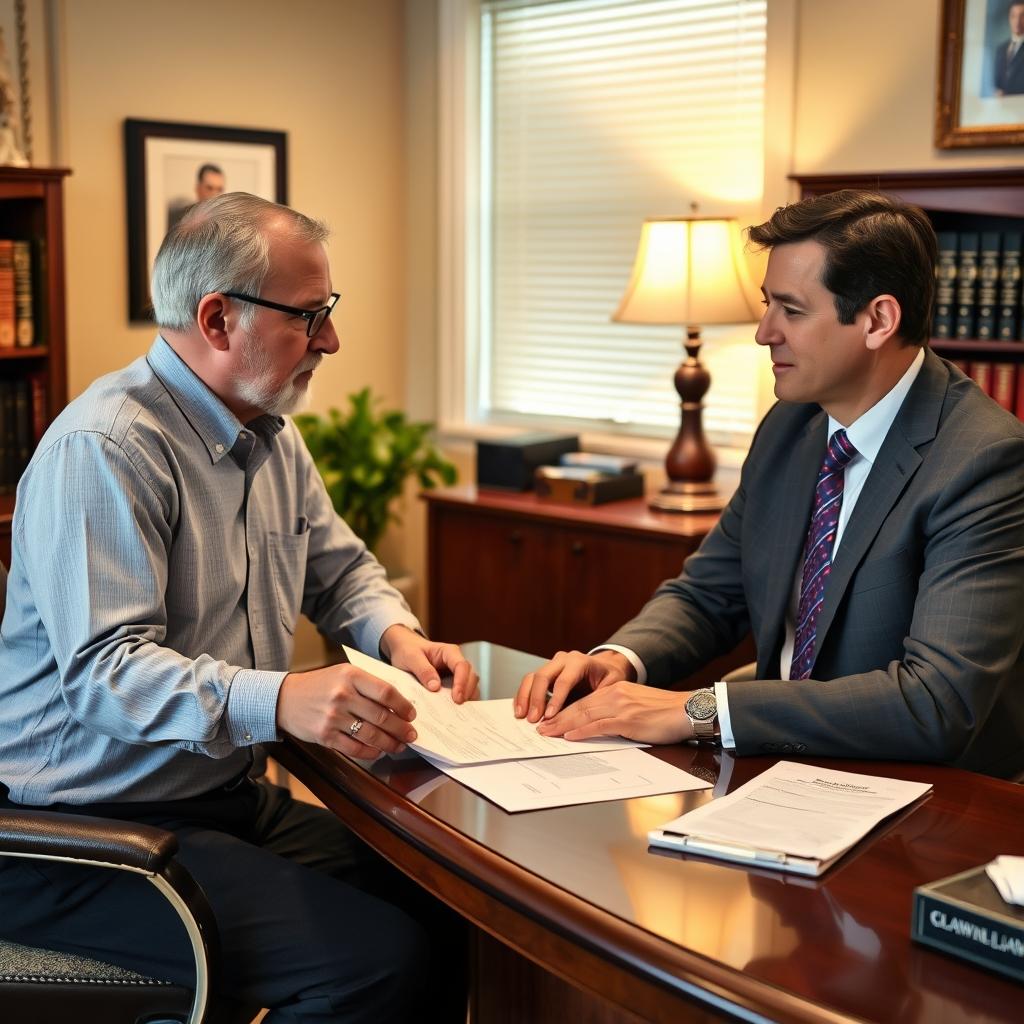
Truck Accident Lawyer Rappahannock County, VA
After a truck crash on Rappahannock County’s rural roads, the legal terrain is shaped by one of the nation’s strictest liability rules. Virginia follows pure contributory negligence—if you are found even one percent at fault, you recover nothing. That rule, paired with a two‑year filing deadline under Va. Code § 8.01-243(A), makes decisive early action essential. Law Offices Of SRIS, P.C. Concentrates its personal injury practice on helping injured people throughout Rappahannock County, including Washington, Sperryville, and Flint Hill, protect their right to compensation after a truck accident. Mr. Sris and his Of Counsel team work to build a record that withstands the contributory‑negligence defense and pursue the full range of available damages. For a consultation, reach our firm at (888) 437-7747.
What Truck Accident Claims Mean in Rappahannock County
Rappahannock County’s landscape contributes to the kinds of truck collisions seen in the area. Two‑lane state highways—Route 211 through Sperryville and Washington, Route 522, and connecting rural roads—carry a mix of local traffic, logging trucks, farm vehicles, and tractor‑trailers crossing the Piedmont. The eastern edge of the county borders Shenandoah National Park, bringing seasonal tourist traffic and out‑of‑area drivers unfamiliar with steep grades and sharp curves. When a large commercial truck or a heavy commercial vehicle is involved in a crash, the injuries tend to be catastrophic, and the complexity of identifying every responsible party—driver, motor carrier, maintenance contractor, or even a loading facility—is significantly greater than in a passenger‑car accident.
Civil claims arising from truck wrecks in Rappahannock County are filed in the Rappahannock County Circuit Court or the Rappahannock County General District Court depending on the amount in controversy. Both courts sit at 250 Gay Street, Suite 1, Washington, VA 22747. No matter which court hears the case, the fundamental law that governs every personal‑injury claim in Virginia is the doctrine of contributory negligence. Virginia is one of only four states, plus the District of Columbia, that continues to apply a pure rule: any plaintiff fault, however small, completely bars recovery. Insurance carriers know this and use it actively during settlement discussions. Building a file that places fault squarely on the defendant truck driver or trucking company is the single most important task in any Rappahannock County truck‑accident case. Early evidence preservation—accident‑scene photographs, electronic control‑module data from the truck, witness statements, and cell‑phone records—makes the difference between a viable claim and one that is dismissed on summary judgment.
How Mr. Sris and His Of Counsel Handle Truck Accident Cases
Law Offices Of SRIS, P.C. approaches a truck‑accident matter as a rigorous factual investigation from the first client meeting. The firm’s team identifies all potential sources of recovery: the driver’s liability, the motor carrier’s responsibility under federal safety regulations, the possible role of a parts manufacturer, and the insurance coverage stack—including underinsured and uninsured motorist policies held by the injured person. Because Virginia’s contributory‑negligence rule can defeat a claim on even a minor fact dispute, Mr. Sris and his Of Counsel work to gather objective proof before memories fade and physical evidence disappears.
If the case cannot be resolved through a pre‑suit demand and negotiation, the firm prepares and files a Complaint in the appropriate Rappahannock County court. Discovery follows as the court’s schedule permits; the timeline varies by the complexity of the matter and the court’s docket. Throughout the process, Mr. Sris and his Of Counsel keep the client informed and evaluate whether a voluntary settlement or trial represents the better path. Should the matter proceed to trial, the firm presents a case constructed on the documentary, testimonial, and experienced attorney evidence that was preserved early. Past results do not guarantee a similar outcome, because every case depends on its particular facts and the application of Virginia law by the finder of fact.
About Mr. Sris and His Of Counsel Team
Mr. Sris, Owner and Founder of Law Offices Of SRIS, P.C., has practiced law since 1997 after earlier service as a prosecutor. His experience includes complex civil litigation, and he is admitted in Virginia, Maryland, the District of Columbia, New Jersey, and New York. Mr. Sris testified before the Virginia House Courts of Justice Committee in support of 2019 HB 635 (chief patron Del. David Bulova). He leads a team of accomplished Of Counsel attorneys, each bringing deep litigation backgrounds. The group draws on over 120 years of combined legal experience and over 4,739 documented firm-wide results. Results may vary. In any new matter.
Our Fairfax Location represents clients throughout Rappahannock County. Reach our firm at (888) 437-7747 to schedule a consultation. The firm’s Of Counsel attorneys include a former prosecutor and a former Virginia State Trooper, among others, each engaged through Excella and operating under the Of Counsel designation. While Mr. Sris maintains personal involvement in case strategy, the collaborative structure ensures that the combined knowledge and courtroom experience of the entire team is available to the client.
Frequently Asked Questions
What is the statute of limitations for a truck‑accident injury in Rappahannock County?
Virginia law gives an injured person two years from the date of the accident to file a personal‑injury lawsuit. This deadline applies to truck‑accident claims under Va. Code § 8.01-243(A). If the two‑year period expires without filing, the claim is permanently barred, regardless of how strong the evidence of the truck driver’s fault may be. Wrongful‑death claims carry a separate two‑year window from the date of death. Because gathering records, securing electronic data from the truck, and identifying all liable parties takes time, it is advisable to consult counsel well before the deadline approaches. Once the suit is filed in Rappahannock County Circuit Court or General District Court, the case proceeds according to the court’s scheduling orders and the pace of discovery.
How does Virginia’s contributory‑negligence rule affect a truck‑accident case?
Contributory negligence bars an injured person from recovering any damages if he or she was even one percent at fault for the accident. Virginia is one of the last states to retain this pure rule. In a truck‑accident context, the defendant’s insurer will scrutinize every action the plaintiff took—speed, lane position, following distance, failure to yield—to argue partial fault. Because even a small finding of plaintiff fault ends the case, the firm’s investigation focuses on disproving any allegation of contributory negligence. This often requires obtaining the truck’s black‑box data, analyzing dash‑cam footage, and consulting accident‑reconstruction attorneys to demonstrate that the truck driver alone caused the collision.
Do I need a truck accident lawyer in Rappahannock County?
You are not legally required to hire counsel, but the unique combination of Virginia’s contributory‑negligence rule and the multi‑party liability typical of truck accidents makes experienced representation highly advisable. A truck crash may involve the driver, the motor carrier, a leasing company, a cargo loader, and multiple layers of insurance—often including federal minimum‑limits policies and excess coverage. Without an attorney, it is difficult to identify all available sources of recovery and to counter the insurance carrier’s arguments that the plaintiff was partly to blame. Most personal‑injury attorneys, including our firm, handle truck‑accident cases on a contingency‑fee basis, meaning that fees are owed only if compensation is obtained. For guidance on your specific situation, reach Law Offices Of SRIS, P.C. at (888) 437-7747.
What federal trucking regulations apply to a crash on Route 211 or Route 522?
Commercial motor vehicles that weigh more than 10,001 pounds, transport hazardous materials, or carry more than 8 passengers are subject to the Federal Motor Carrier Safety Regulations. The FMCSA rules govern hours of service (limiting driving time and mandating rest breaks), vehicle inspection and maintenance, driver qualification, and electronic logging‑device requirements. Violations of these regulations—such as a driver operating beyond the permitted hours, a truck that was not properly inspected, or a motor carrier that permitted a driver with a suspended commercial license to operate—can serve as presumptive evidence of negligence. Because the rules are federal, they apply regardless of whether the crash occurs on a county road or a state highway in Rappahannock County. Identifying a regulatory violation early often strengthens the injured person’s position significantly.
What should I do after a truck accident in Rappahannock County?
Seek medical attention immediately, report the crash to law enforcement, and preserve all available evidence. On Rappahannock County roads, the responding officer will prepare a police report that becomes an important piece of documentation. Take photographs of the scene, the vehicles, and any visible injuries. Exchange information with the truck driver and ask for the motor carrier’s name and USDOT number. Do not give a recorded statement to an insurance adjuster or sign any release without first consulting an attorney. Contact your own insurance carrier to report the incident, and then reach a truck‑accident lawyer who can begin the investigation while evidence is fresh. For a consultation, reach Mr. Sris and his Of Counsel at (888) 437-7747.
How do truck‑accident cases differ from car‑accident cases in Virginia?
Truck‑accident litigation typically involves multiple defendants, federal regulations, and larger insurance policies, making the claims more legally and factually complex than a typical car‑accident case. A passenger‑car collision usually centers on the two drivers and their insurers. By contrast, a truck crash often requires examining the motor carrier’s safety record, the truck’s maintenance logs, the shipper’s loading practices, and the manufacturer’s component‑design history. Federal Motor Carrier Safety Administration data and electronic data‑recorder downloads from the truck itself are part of the discovery. These additional layers mean that the investigation, pleadings, and settlement negotiations take a different shape. However, the same Virginia personal‑injury statute of limitations and contributory‑negligence rule apply to both truck and car claims.
What if the truck driver was working for a national freight company?
A national motor carrier remains vicariously liable for the negligence of its employee‑drivers while they are acting within the scope of employment. If the driver was hauling freight for a large logistics company, that company’s insurance—often a multi‑million‑dollar commercial policy—becomes a target defendant. The investigation examines whether the carrier properly trained and supervised the driver, complied with federal hiring standards, and maintained the equipment. Even if the driver was an independent contractor, the carrier may still bear liability under certain theories, such as negligent retention or failure to inspect. Identifying all responsible parties at the outset ensures that the claim pursues the full range of available compensation.
Related practice pages: Fairfax County Personal Injury Lawyer | Prince William County Personal Injury Lawyer | Manassas Personal Injury Lawyer | Falls Church Personal Injury Lawyer
Attorney advertising. Prior results do not guarantee a similar outcome. Results may vary.
Case results depend on a variety of factors unique to each case.